Germany’s Microgravity Infrastructure
From Concept to Market
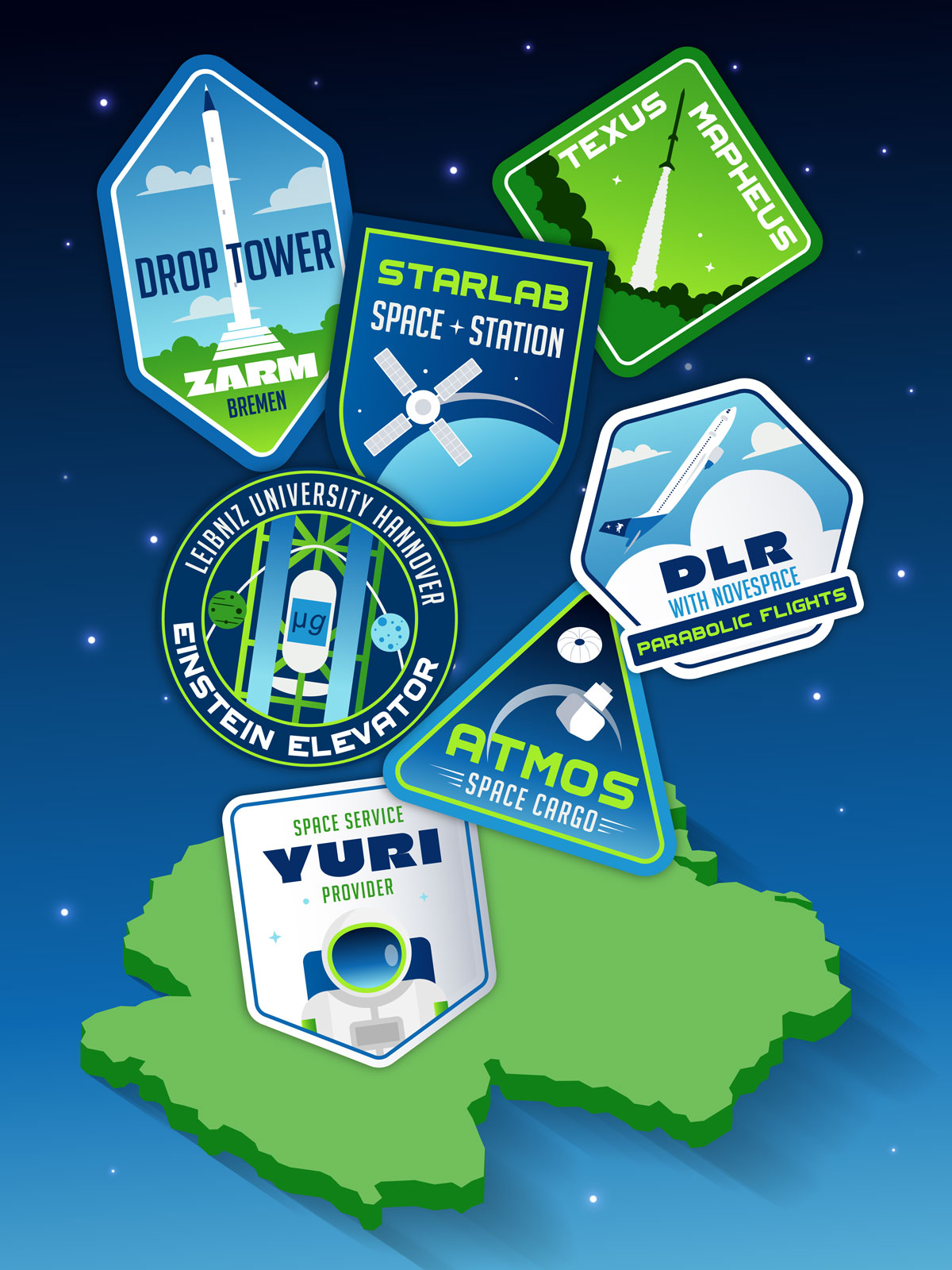
A tool to generate results that cannot be achieved on Earth
observe biological mechanisms without gravity-driven interference
develop new drug formulations and therapies
Microgravity research is not about access to space — it is about reducing risk and cost while enabling results that are not possible on Earth.
Translating microgravity research into real-world applications
European Space Agency’s Business Applications and Space Solutions programme (BSGN) has demonstrated how microgravity research can be translated into real-world applications across life sciences, agri-food, and biotechnology. These projects illustrate how companies and research teams move from early validation to orbital experiments, generating insights that are not achievable under Earth conditions.Exploration of closed-loop food and life-support systems
A structured but flexible pathway
Microgravity research in Germany is best understood as a structured but flexible pathway, not a fixed sequence of platforms. The key question is: at what stage is your experiment — and how can you reduce success and cost risk?Experiments enter at different points depending on their maturity, the process under investigation, the required duration of microgravity, and the level of operational interaction needed. Some biological effects can already be observed in seconds or short orbital missions, while processes such as crystallization or biological adaptation require long-duration, stable conditions in orbit.
Most projects begin with early validation on ground-based platforms (e.g. drop tower, Einstein Elevator) to test whether microgravity provides a meaningful advantage. This allows for fast, low-cost iteration and reduces uncertainty before committing to flight.
Further steps include operational testing (parabolic flights) and suborbital validation (TEXUS / MAPHEUS), where experiments are tested under real microgravity conditions for several minutes.
Do I need microgravity?
Seconds
→
Early effects
Minutes
→
Validation
Weeks / months
→
Real impact
Time & Capability Ladder
Drop Tower
Seconds
Einstein Elevator
Seconds (variable)
Parabolic Flight
~20 sec × 30
TEXUS / MAPHEUS
Minutes
Starlab / LEO
Weeks – Months
Phase-Based Platform Selection
Access to microgravity is typically organized through specialized space service providers such as YURI, which supply experiment hardware, integrate payloads, and secure flight opportunities. Together, they form a flexible ecosystem in which experiments can be deployed, executed in orbit, and — depending on the platform — returned to Earth.PHASE 1
Early Validation
Fast, low cost
GOAL
Test fundamental hypotheses, physical or biological effects under microgravity
PLATFORMS
→ Drop Tower Bremen (ZARM)
→ Einstein Elevator (Hannover)
KEY ADVANTAGE
Fast iteration, low cost, high experimental control
PHASE 2
Operational Testing
Human & process validation
GOAL
Validate experiment procedures, handling, and human interaction
PLATFORM
→ Parabolic Flights (DLR with noveSpace)
KEY ADVANTAGE
Realistic environment with human-in-the-loop capability
PHASE 3
Technology Validation
Critical transition step
GOAL
Validate hardware and experimental setup under real microgravity conditions
PLATFORMS
→ TEXUS
→ MAPHEUS
KEY ADVANTAGE
Minutes of real microgravity → enables TRL increase
PHASE 4
Orbital Research
Science & industrial applicationsGOAL
Conduct long-duration experiments under stable microgravity conditions
PLATFORMS
→ ISS / Starlab (long-duration, human-in-the-loop)
→ Free-flyer systems (e.g. ATMOS)
→ Access via space service providers (e.g. YURI)
KEY ADVANTAGE
Weeks to months of microgravity → real application environment
Budget Reference
Costs increase with duration and complexity, from ground-based validation to long-duration orbital missions.Infrastructure Deep Dives
A system perspective — from ground-based platforms to commercial orbital stations.Drop Tower Bremen
(ZARM)
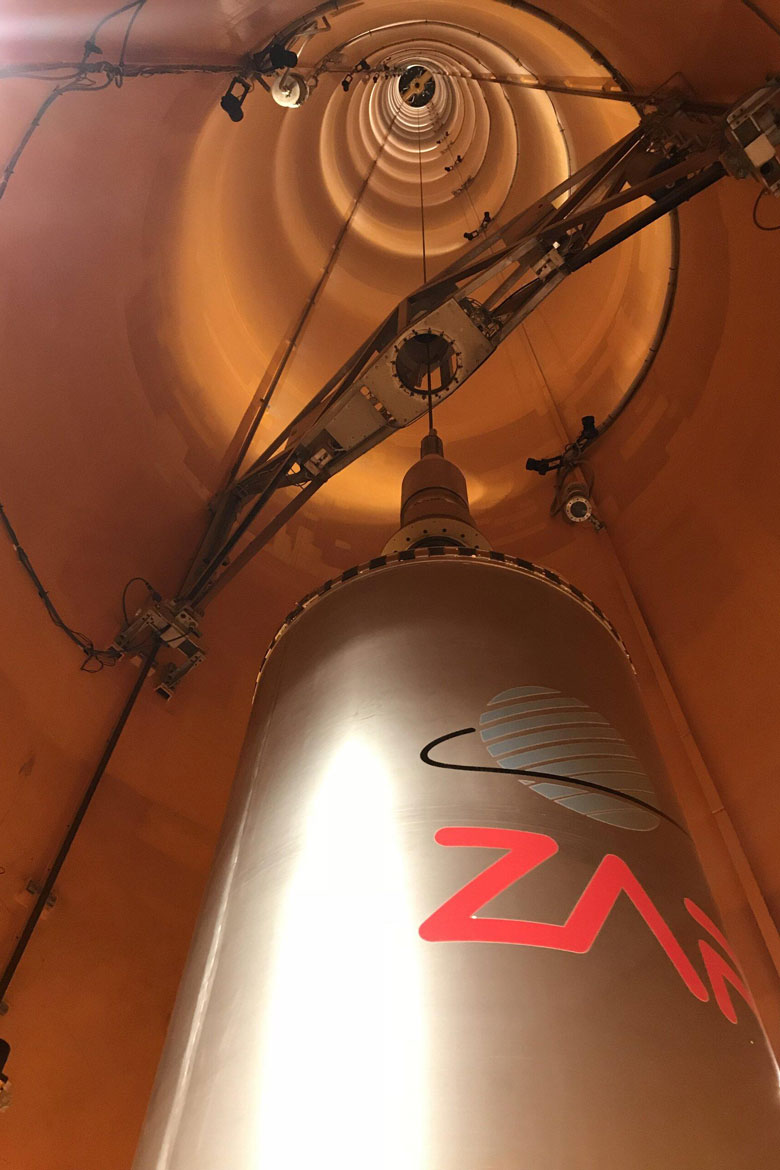
The Drop Tower Bremen provides seconds of ultra-high-quality microgravity through free fall, with unmatched experimental precision and repeatability.

Core characteristics
✓ Duration: ~4.7 seconds (drop) / up to ~9 seconds (catapult)
✓ Quality: near-perfect microgravity
✓ Frequency: multiple experiments per day
Ideal for
✓ Fundamental physics
✓ Fluid science
✓ Early-stage experiment validation
Einstein Elevator
(Hannover)
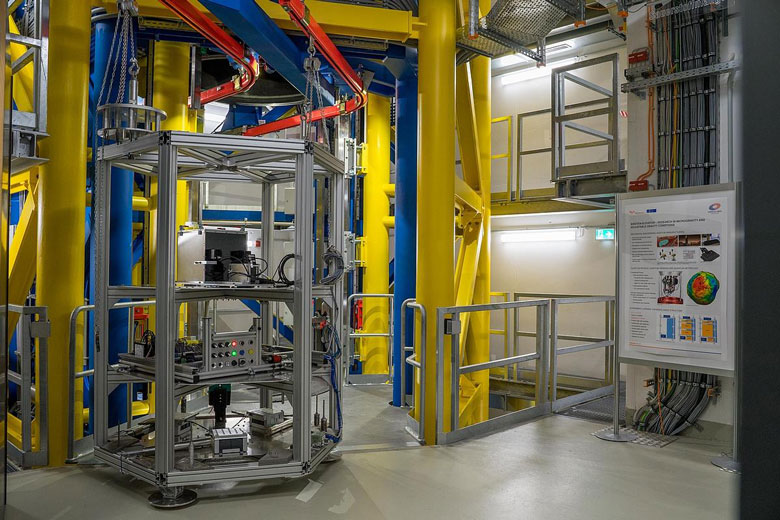
A next-generation facility that enables controlled, repeatable simulation of both microgravity and partial gravity (Moon/Mars conditions).
Core characteristics
✓ Duration: seconds ✓ Unique feature: variable gravity levels (not only 0g) ✓ High repetition rateSimulation of
✓ Lunar gravity (~1/6 g) ✓ Martian gravity (~1/3 g) ✓ Strong integration into lab workflows ✓ High throughput experimentationParabolic Flights
DLR with noveSpace
Parabolic flights generate repeated short phases of microgravity (~20 seconds) and enable experiments with direct human interaction.


Core characteristics
✓ Duration: ~20 seconds per parabola ✓ Repetitions: ~30 parabolas per flight ✓ Environment: dynamic but realisticIdeal for
✓ Human-in-the-loop experiments (astronauts, operators) ✓ Life sciences ✓ Medical research ✓ Operational validationTEXUS / MAPHEUS
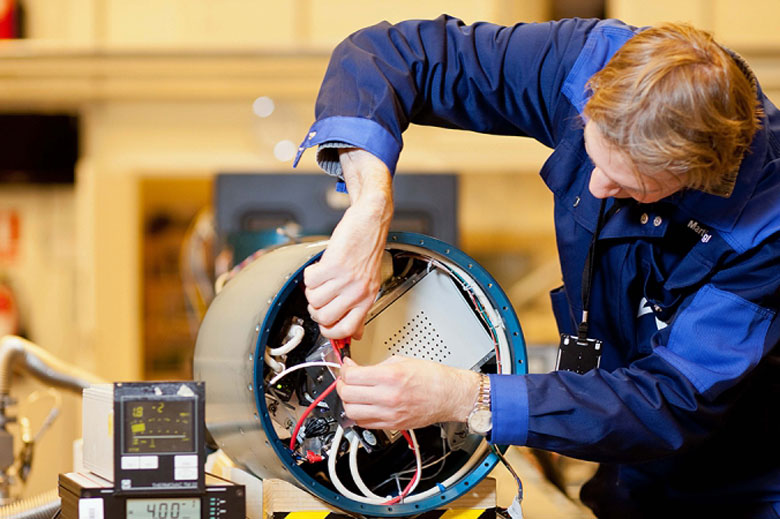
German sounding rocket programmes that provide several minutes of real microgravity for scientific experiments and technology validation.
Core characteristics
✓ Suborbital sounding rocket missions ✓ Several minutes of high-quality microgravity ✓ Payloads are recovered after flight ✓ Between ground-based testing and orbital missionsSuitable for
✓ Hardware validation ✓ Materials research ✓ Fluid physics ✓ Life sciences ✓ Experiment qualificationYuri GmbH
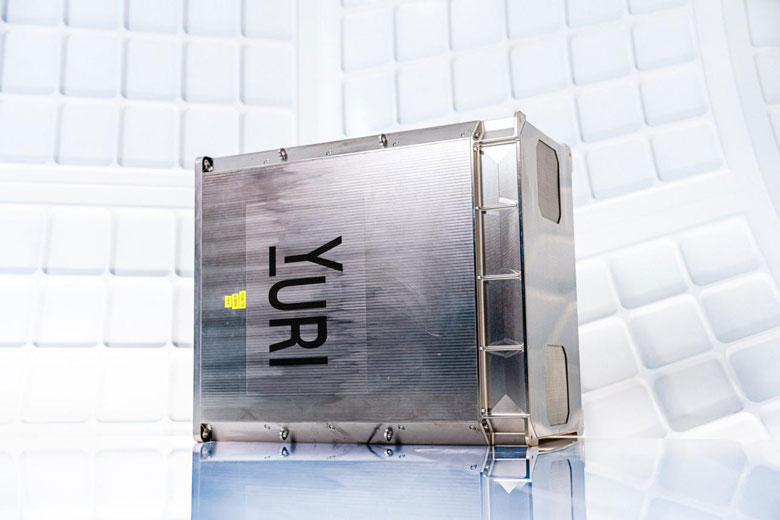
Space Service Provider that offers standardized, automated life-science infrastructure for conducting experiments in microgravity, primarily on the ISS and future LEO platforms.

Core characteristics
✓ Model: “Science-as-a-Service” for microgravity ✓ Platform: ISS, future commercial stations ✓ Automated payload systems ✓ Miniaturized biotech labs ✓ Interface between researchers and space accessStrengths
✓ Reduces barriers to space — no in-house space expertise needed ✓ Fast deployment of experiments ✓ Standardized processes ✓ Proven track record: repeated ISS missions ✓ Accelerates technology transfer from orbit to EarthATMOS Space Cargo GmbH
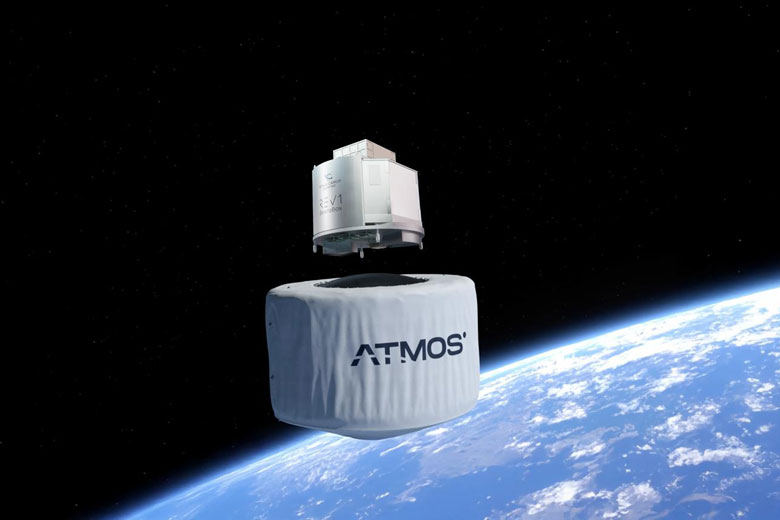
A reusable orbital capsule that enables rapid deployment of experiments in Low Earth Orbit and fast return to Earth under controlled conditions.
Core characteristics
✓ Orbital capsule with integrated experiment payload ✓ Independent or ride-share launch capability ✓ Short-duration missions with rapid return ✓ Designed for time-sensitive experimentsIdeal for
✓ Biotech, pharma, and materials research ✓ Fast turnaround cycles between orbit and lab ✓ Reduced reliance on long-duration space station missionsStarlab LLC
German participation via Airbus Defence and Space
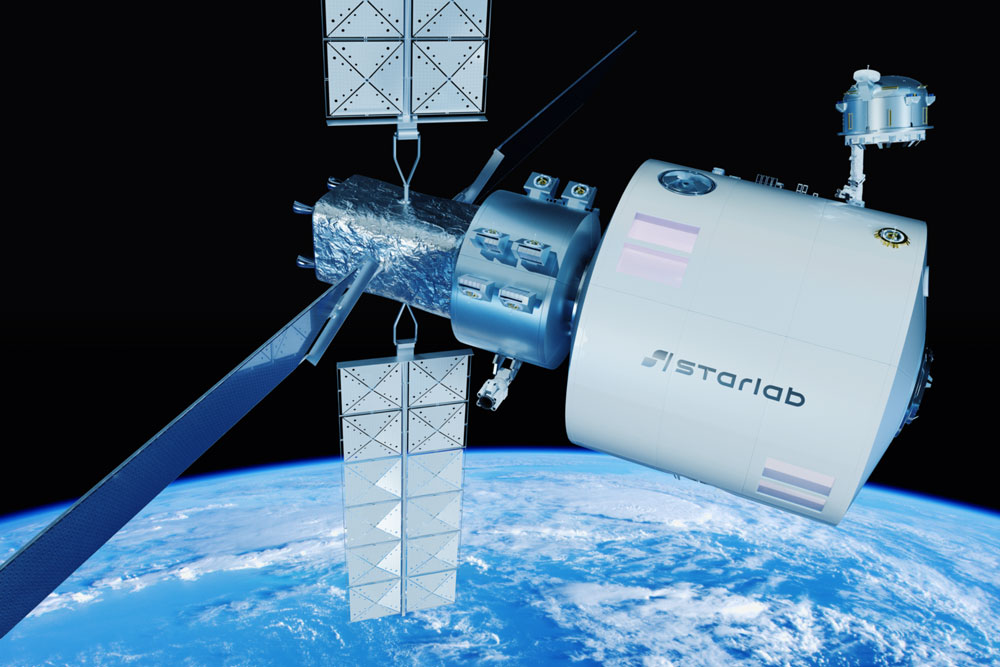
A next-generation commercial space station, with Germany playing a key role through Airbus participation.
Core characteristics
✓ Platform: Low Earth Orbit (LEO) ✓ Duration: weeks to months of microgravity ✓ Successor to ISS-type research environmentsGerman role & key sectors
✓ Airbus holds ~30% participation ✓ Provides industrial access, infrastructure capabilities, and mission integration ✓ Pharma, biotech, advanced materialsStructure your microgravity pathway
Whether you are a researcher, startup, or investor — we help you navigate platform selection, structure access, and translate microgravity innovation into investable business models.Whether you are an investor, a company or a research institution — we support you in structuring capital, partnerships and scalable business models.